
When people hear words like Autism, ADHD, Dyslexia, Dyspraxia or neurodivergent (ND), they often imagine something is “wrong” with the person.
That is our mistake as a society! We are quick to judge.
1 in 5 people are neurodivergent!
That’s 20% of the world!?
Lets be clear. There is no shame to be Neurodivergent.
Our society is built for Neurotypical (NT) people.
This is evident through our schooling, university and government systems which were designed to build “workers” and “followers” who comply not inventors and free thinkers who challenge the status quo.
Anyone who doesn’t fit into that profile is labeled as “abnormal” by the neurotypical person and those around them.
This then comes with the stigma of they are different or not normal.
While there are neurodivergent people who require different levels of support, there are levels of special abilities that neurotypicals cannot even phantom to gather or develop. ie: Genius , Master like etc etc in a particular skill.
If you view history longer than the last 200 years, we see it’s the many Neurodiverse people that have been inventors, leaders, actors, etc such as Albert Einstein, Nikola tesla, Charles Darwin, Alan Turing, Michelangelo, Wolfgang Mozart, Beethoven etc.
If neurodivergence didn’t exist we would have zero innovation.
If the world was allowed to be more flexible and we didn’t have to prioritize optimizing productivity and profit, then accommodations for neurodivergent people would “just be normal”. We would then put in effort to understand their needs and help support them.
This may allow a far greater number of people to participate in and contribute to society.
However, this is limited in our current state and we have to understand and work with the environment or learn how to build support structures around someone that is neurodivergent.
Did you know the worlds richest people are Neurodivergent like Elon, Gates & Bezos?
It’s this key “ABILITY” which can be a super power that makes them stand out and create a difference.
Some of them talk about their challenges and others don’t.
(Important) Why write this article?
I am neurodivergent.
I am also the parent of two neurodivergent children.
My entire family is neurodivergent. Yes its genetic!
For most of my life, I tried to fit into the world around me. I have masked. I have mirrored people, I have adapted to environments and I copied what looked “normal” to fit in.
This has been my “ability”. I also see patterns, sense things and can do things many people cannot. At the same time, I struggle with things that others can do with ease.
For instance, I struggled through most of my schooling, teens, university and adult social life. However, when I was in grade 11 & 12, Accounting and IT, were the 2 subjects that took over and showcased my abilities. This caught many by surprise because I was generally at the back of the class being 30 on 40.
In 12th Grade I was able to Top my class and school in the IT subject scoring 95% without even studying. No one was able to explain that.
As the years have gone by, I pushed through things that others may not have even noticed, even in my family.
All of this has allowed me to build a corporate career – “of sorts” in 10 years across 16 jobs!
Many career shifts from accountant, process analyst, digital business analyst, ecommerce project manager, program manager, solution architect, product manager, head of product, mentor etc. etc. etc.
I have mentored people and coached people from earning 5 figures to 6 figure salaries and working at some of the top companies in the world and in Australia.
I have worked in small startups, mom-dad businesses, multi billion dollar global enterprises, unicorns and even consulted for many. Whether its D2C, B2B, B2C, B2B2C, I have worked in almost every industry vertical there is from consulting to client to product side roles.
My neurodiversity has allowed me to see systematic problems
and solve complex issues that others cannot.
I have even been told by an executive that
“I told them what they needed to hear not what they wanted to hear.”
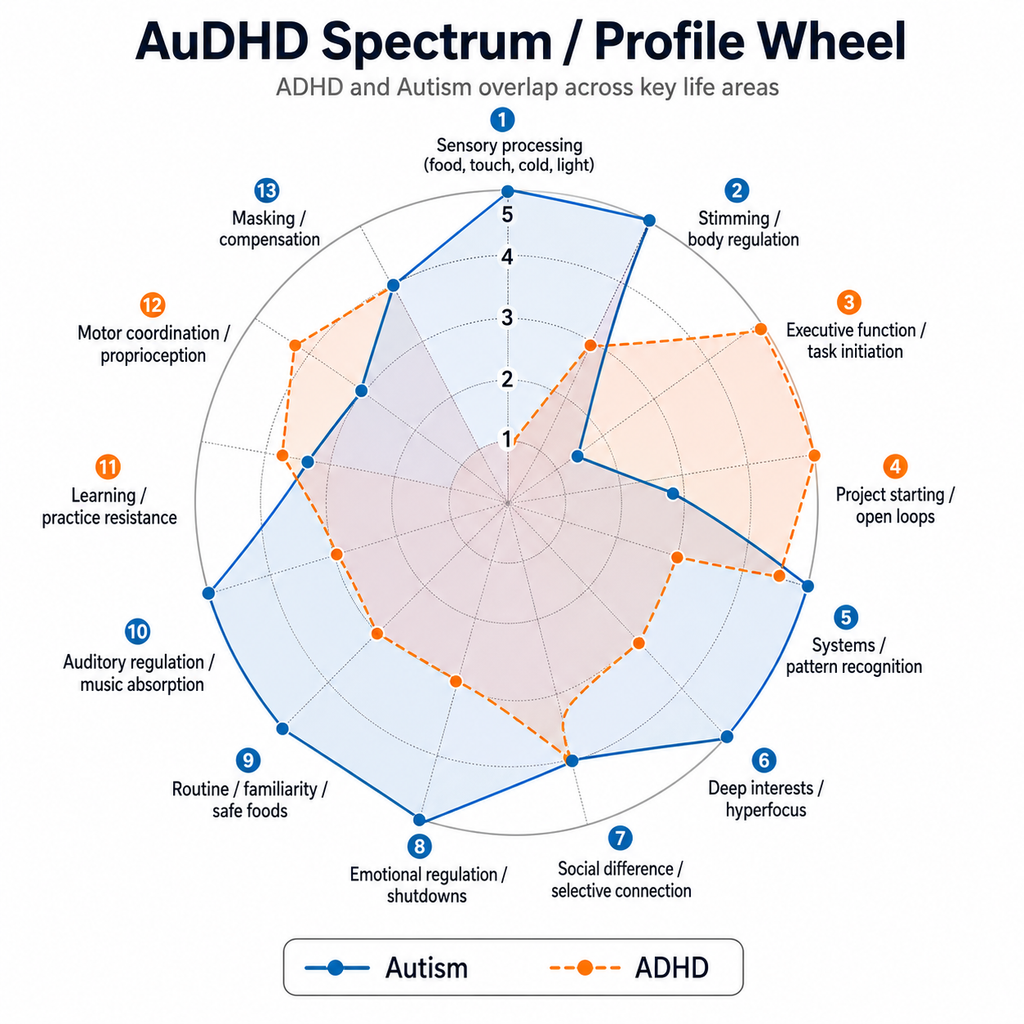
Image: example of a neurodivergent spiky profile.
In this example you can see the same person with 2 extremes who can be very good with music but struggle to learn music the way society teaches it and expects it to be learnt.
While Neurodivergence has given me the ability to see, say and do what others around me cannot, I also have many….. many challenges.
My martial arts training has given me the courage to standup, speak out and also the tools required to help support these challenges.
This is built through neuroplasticity.
A concept I will explain further below.
For example, I have been able to stand up in a board rooms of big executives from ASX listed companies challenge CEOs & CFOs on their understanding and assumptions and show them things they do not understand, comprehend or won’t and can’t even think about.
I have also faced larger rooms of 150 – 200 people where I will question things others will dare not say including calling out the Elephant in the room.
In the world of martial arts, there is a big thing about not speaking up or calling things out towards seniors or high “Ranks”.
I have never let this apply to me. I blogged for the last 20 years and created a platform for sharing my views which has reached millions of people.
This skill has also given me unique career opportunities to write for companies like Airfocus in Germany and publish articles to global audiences and mentor people across the globe.
However through all of this, while I can hyperfocus and smash a task out, see systems and patterns that others cannot and look OK, on the inside, the world often feels louder, brighter, colder, stronger and more exhausting than it seemed to feel for other people around me.
For example – any injustice, temperature, smell, sound and light can all affect me deeply.
It can lead to a meltdown, mood swing and/ or shutdown. My nervous system can instantly just react!
A social gathering can completely shut me down or excite me and cause me to put 100% energy which then causes a shutdown after and a long recovery period.
Teaching martial arts classes daily can also result in complete shut down which takes me half the day to recover every day.
While I can write a 6000 word article, it can take me 4 weeks to a few months to come around to completing it while on occasion I will abandon it completely.
Something small and irrelevant to someone else can feel overwhelming to my nervous system and cause a meltdown, reaction or shutdown.
At the same time, I can map out an entire company in a single week which may require some people weeks and months or years to do.
example: a company spent over 200 mil US on building a platform in a way against which I advised them in the first 30 days of being there. I told them what would happen to their company. It took them 3 years to realize this…..
Over the years, I have learnt how to cope, build support mechanisms, routines and hide these traits that require me TO FIT IN, and showcase traits that make me standout.
Or sometimes just avoid situations that will impact me negatively.
However, as time has gone by, I have also learnt that I do not need to FIT IN as this comes at a cost.
This cost is not seen in public as I have learnt to control my emotional regulation in public (aka Masking) through my training.
I have learnt to ask for help and I have built mechanisms to cope and workaround it.
As a neurodivergent parent, I now also see similar struggles in my own children.
As a COACH, I also see how easily neurodivergent children can be misunderstood when adults only look at the behavior and not what is happening underneath.
This is why my coaching APPROACH is different for everyone.
I am able to understand other Neurodivergent people and see and sense things even their own families cannot.
This article, has taken me 3 months to come to a state to publish.
I had to decide what to write and share about in this article.
This is partly because of my own neurodivergent challenges.
For example, I can overthink, delay, get distracted, completely forget what I was thinking, start 10 other things, stop them and leave everything at 80%, come back to some of it, and then leave the rest and sometimes even question whether I should complete it.
With this article I have contemplated if I should share it at all more than 20 times in the last few months. I have hyper focused and double downed on knowledge consumption by watching, reading 100s of videos and articles to try to back up my knowledge and further understand things better so I can explain it to others and improve the way I can coach.
As an example – to complete this article it, I have stayed up from 1 AM to 6 AM on a single day to finalize writing and rewriting sections while editing it in the days that followed after publishing.
While, I am not a doctor or psychologist, I am someone who has lived with Neurodiversity masked through it most of my life, now parenting through it, and trying to help teach children who are trying to make sense of the same neurotypical world with the same struggles I had.
In this article, I will share the key concepts and how martial arts has helped improve the quality of my life, how I change the way I teach to help improve the quality of life of neurodivergent people.
My hope is that this article helps parents, teachers and instructors look at neurodivergent children differently and see their abilities and super powers while also addressing the support they need and changing the traditional ways of teaching and the expectations around learning while also understanding how martial arts can significantly transform a neurodivergent persons life.
In our society today, we use labels to put people into “categories” because it may help explain what we do not understand or rather don’t want to understand.
The use of “Labels”
and why we need
to be Very careful
Neurodiversity to me simply means that human brains are not all built the same way.
It also means that not everyone will be able to do something by a certain age or “level” or grade.
Medical research is still evolving and will continue to change our understanding, assumptions and the way we treat things.
In fact, the definition of something like Autism has changed drastically over the last 30 years and continues to change.
There are more debates than agreements on who fits this label and who doesn’t.
The below image is from this article which shows the brain structure differences in NT & ND brains carried out by research team at Yale.
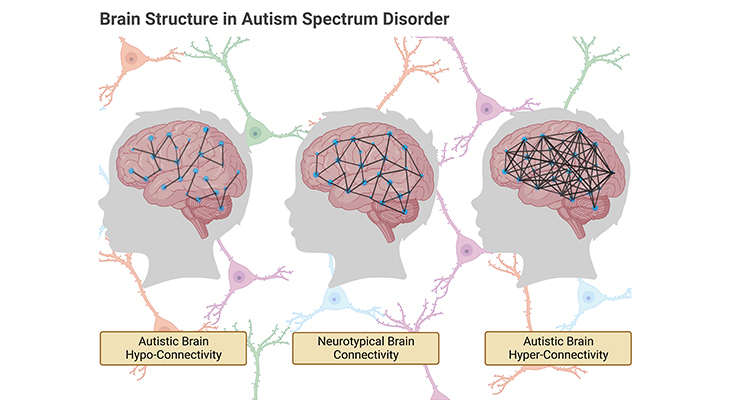
This recent Yale study gives a good example of how the science is still developing.
The above image shows brain synapses in various types of brain structures which is currently defined under medical science
– i.e. things we think we know and understand for now.
Researchers used PET scans to measure synaptic density in living autistic adults.
Synapses are the connection points that allow brain cells to communicate.
The study found that autistic adults had lower synaptic density across the brain compared with neurotypical adults, and that lower synaptic density was linked with more autistic traits.
This does not mean we now have one simple biological explanation for autism. The study was small, and autism is still highly complex.
There are real biological differences being studied. Science is still working out exactly how those differences relate to lived experience.
Neurodiversity is still misunderstood by many families, schools, workplaces and even professionals.
The science and understanding
is also still developing.
There is strong evidence that ADHD and Autism have biological and genetic components, but that does not mean researchers have found one simple “ADHD gene” or one simple “autism gene.”
They have found genes like DRD4-7R gene variant that go back 40,000 years and may have given ancient man the survival edge!
These are complex neurodevelopmental states involving many genetic, developmental, environmental and neurological factors.
Modern research continues to explore genetics, brain networks, executive function, sensory processing, motor differences and lived experience.
People think, learn, move, feel, react and process the world differently.
- Some people can sit still and follow verbal instructions easily while others need movement, repetition, visual examples, structure or extra time.
- Some people notice every sound in the room.
- Some are deeply focused on one interest.
- Some are physically confident but struggle to organise tasks.
- Others are highly intelligent but find transitions, social expectations or emotional regulation exhausting.
This does not mean the person is lazy, broken or undisciplined.
It means their nervous system may be working differently.
If anything research is showing these traits are genetic and ancient. Its only awareness that has increased.
The problem is that society often expects all people to function in one narrow way.
I know this all to well. I experienced it at Work, at School and even in my broader family.
In Australia where the schooling system and medical system expects you to label your child or yourself so they can “manage” the situation or issue you medication to drug you so you “FIT IN”. I am against this.
We often see it start in the schooling system with
- Sit still -> Look at the teacher.
- Listen quietly -> Follow the instruction immediately.
- The best one -> Do not fidget!!! (AKA STIM)
- Do not ask too many questions.
- Do not react too strongly.
- Do not move until told.
For many neurodivergent children, this is not simple.
- It can feel like being forced to operate in an environment designed for someone else’s brain.
That is why the language we use matters.
And approach to teaching also has to change.
Unfortunately, most martial arts schools are very rigid and based on age old systems of “adhere to the rules or else!”. If you don’t listen to the “SENSEI” you are in trouble!
My hope is that in due course this changes, however it is something that will take generations of change.
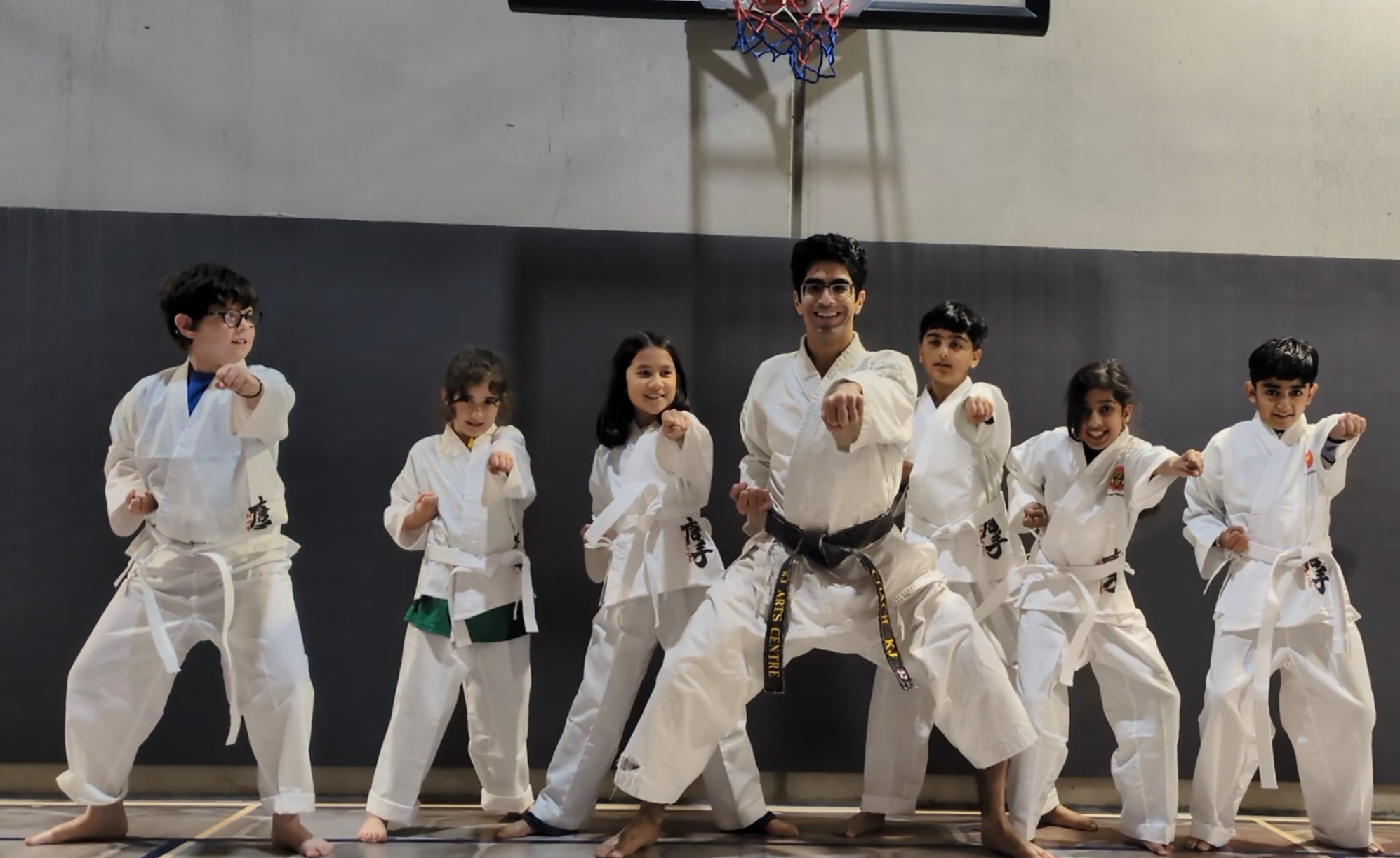
I often see challenges in trial sessions where parents get nervous when it appears like their child isn’t trying or listening.
At this point, I try to explain to the parent, just to take it easy and let me manage the situation.
Sometimes, I also encourage the parent to leave so the child doesn’t feel nervous.
My approach is to give every person space and time while working with them on developing skills.
This may even mean, I have to turn off some of the lights or hold hands while moving and showing them how to do the movement or let them stim and adjust.
Sometimes it also means flipping the whole class plan and spontaneously changing the class structure.
Many neurodivergent people have challenges with proprioception.
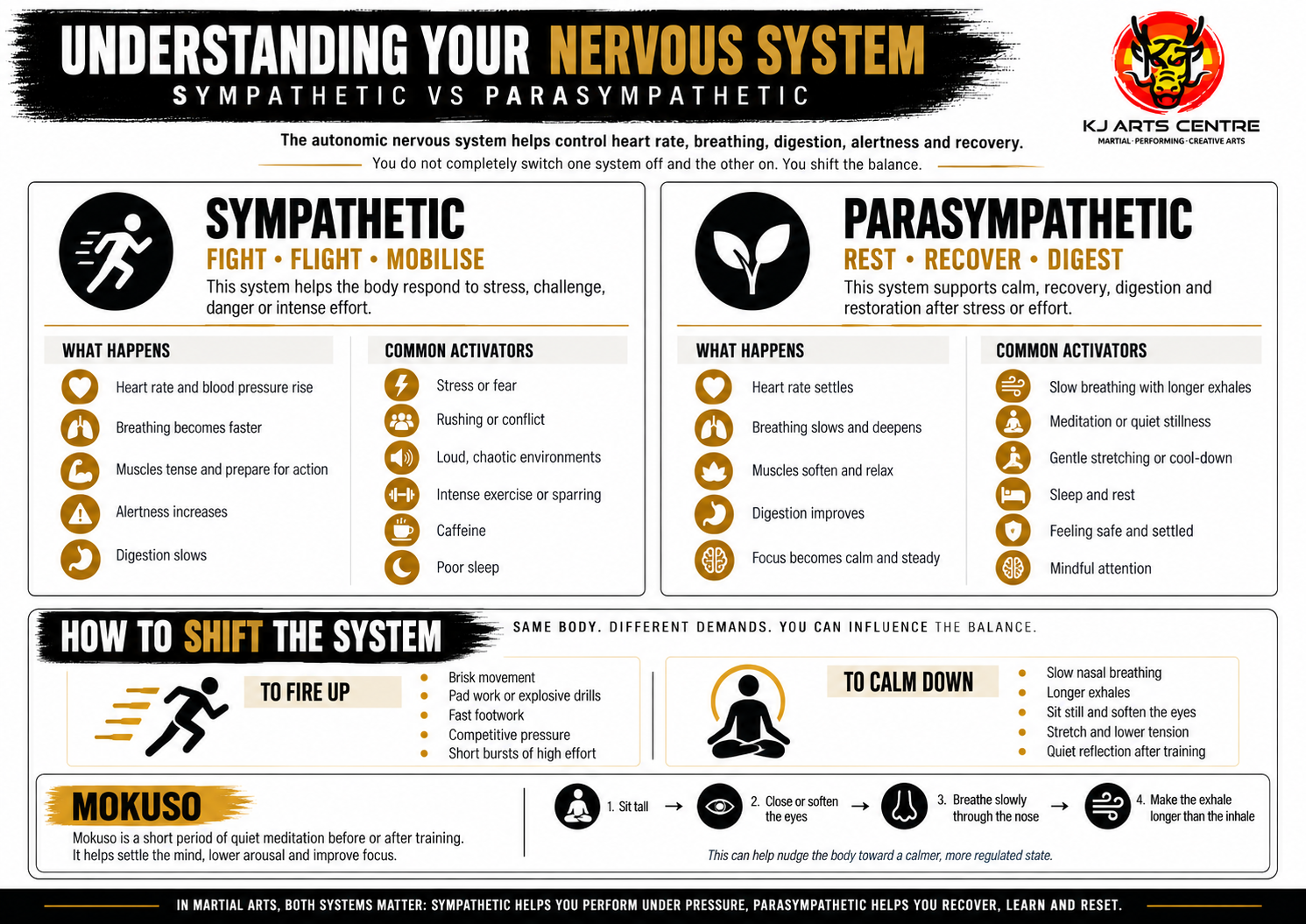
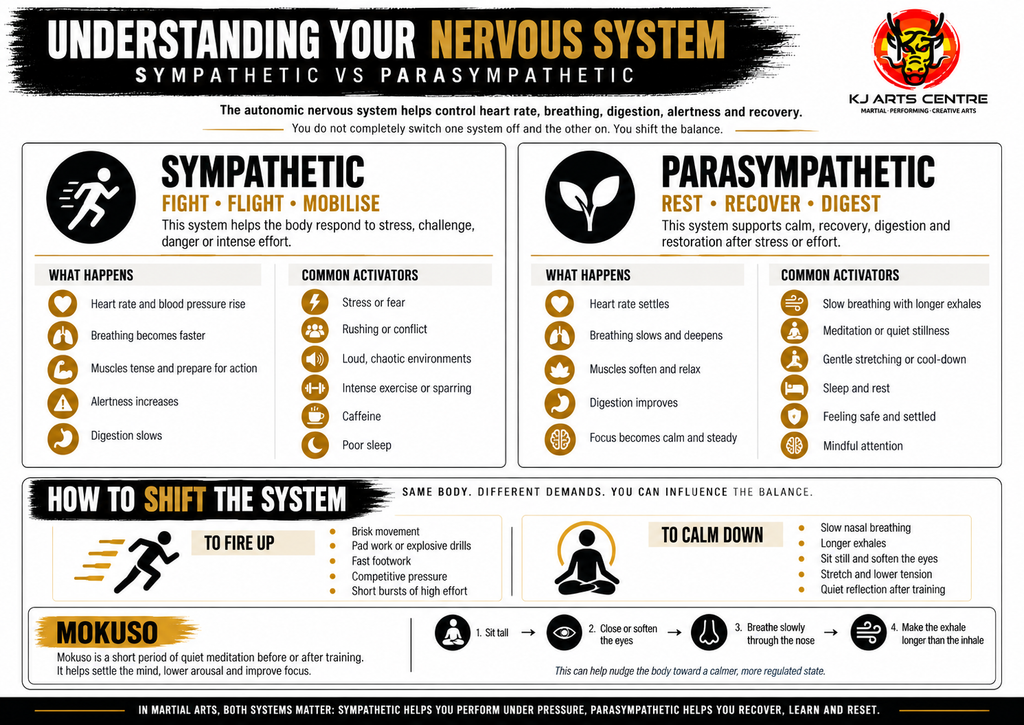
I also have specific exercises and movement patterns to help calm or excite the nervous system, build out neuroplasticity that helps create the ability to regulate and improve executive functioning.
Did you know – occupational therapists often recommend “heavy work” activities like pushing heavy objects, climbing and or jumping on trampolines.
Image below : Understanding the nervous system – sympathetic & parasympathetic.
Functioning vs ability
In the last 30 years we have seen these terms like “high functioning” and “low functioning” been thrown around by medical professionals and others.
That can be misleading to start with and is now being phased out in clinical diagnosis.
The medical community across the world is still in debate about how they categorize and understand things.
For instance, a child or adult might speak well, read well or perform strongly in one area, but still struggle with sensory overload, emotional regulation, coordination, planning, transitions or social exhaustion.
Another person may struggle with speech or schoolwork but have strong visual thinking, memory, movement awareness or creativity.
Neurodiversity is not a straight line of function from “low” to “high.”
A better way to understand a neurodivergent person is to ask:
- where are their strengths,
- where are their support needs to match the environment
- what environment helps them function best?
- Are they in the right enviornment?
The challenges with identifying Neurodivergence
A neurodivergent person may have a very uneven profile of skills and capabilities.
For instance, they may be advanced in one area of their life while requiring significant support in others.
Medical professionals have debated & continue to do so about how to categorize and identify traits, capabilities and people’s needs.
I have even heard some people spend 4-6000 dollars on diagnosis and get nothing while others might see some label in a 1000 dollars and get funding and support.
IMO -> Neurodivergent people with many different traits can be very hard to label and fit into any category.
Medical professionals like to call this “spiky profile.”
For example, they may have
- strong memory but poor working memory under pressure
- excellent creativity but difficulty following multi-step instructions
- high energy but poor impulse control
- strong physical ability but poor coordination
- advanced vocabulary but difficulty with social cues
- strong pattern recognition but difficulty with flexibility
- intense focus on preferred topics but poor attention for boring tasks
- emotional sensitivity that looks like “overreacting” to others
- high focus but low ability to adjust to sensitives in light, smell, sound, temp etc.
This is why it is not helpful to describe neurodivergent people as simply “good” or “bad,” “mild” or “severe,” “high functioning” or “low functioning.”
The real question is: what does this person need to thrive in life?
- attention and focus
- impulse control
- working memory
- sensory processing
- emotional regulation
- social communication
- motor coordination
- flexibility and transitions
This matters because many people while they are children are punished for what is actually a support need.

Forcing
“masking”
as a society
Masking is when a neurodivergent person
suppresses their natural responses
and performs expected behavior to fit in.
Example – they are told to not stim by stop swinging their arms and feet
and sit still.
In the short term, this may make others more comfortable or the people around you might consider you “NORMAL”.
In the long term, it can increase exhaustion, anxiety, distress and burnout.
Masking behavior as standards in our society is generally driven by adults who do not understand the consequences such as parents, grandparents, uncles, aunts, teachers etc.
For instance, in a class a child who cannot sit still may be seeking movement input. While a child who avoids eye contact may be trying to listen without sensory overload.
A child who melts down during transitions may not be “naughty,” but overwhelmed by sudden change.
And most commonly seen – a child who forgets instructions may not be ignoring the adult.
Their working memory may be overloaded.
When adults misunderstand the behavior, they try to force the child to look “normal” often in embarrassment. Or they try to get the children to “fit in”, “behave”, “control themselves”.
Forcing a child to constantly hide their differences can create masking which comes with a heavy load to the nervous system.
This also deeply impacts their confidence.
The Problem With Forcing “Normal” – “ie: Forcing Masking Behaviors”
In many traditional families and communities, neurodivergence is misunderstood.
A child may be called naughty, lazy, rude, careless, too sensitive, too much, not disciplined, not trying hard enough or embarrassing.
This can create shame.
The family may try to “normalise” the child by forcing them to behave like everyone else.
Sit like everyone else. Speak like everyone else. Learn like everyone else. Stop moving. Stop stimming. Stop asking. Stop reacting. Stop being different.
But this can create deeper problems.
When a child learns that their natural way of existing is unacceptable, they may begin masking.
They may suppress discomfort, copy others, hide confusion, force eye contact, hold in movement, ignore sensory distress and pretend they are coping.
From the outside, adults may think the child has improved.
Inside, the child may be exhausted.
Over time, chronic masking can contribute to distress, anxiety, depression-like symptoms, burnout, loss of function and withdrawal.
Some adults only discover later in life that what was called anxiety, depression, stress or poor resilience was actually years of unsupported neurodivergence and masking.
This is extremely common in high masking adults who have never had a formal diagnosis and spent their whole life masking, only to develop severe depression, anxiety and stress disorders. This normally hits in their late 30s -40s when they get diagnosed with stress disorders or generally when their children get a diagnosis
This is why the goal should not be to make a child look normal.
✴︎ The goal should be to help the child
become
capable,
confident
&understood
So how do you work with this in an educational and daily life?
We should not erase the differences in behaviour. Instead, we should help the person understand themselves, build capacity, and learn skills in an environment that respects their nervous system.

Executive Function: The Brain’s Management System
A major area affected in many neurodivergent people is executive function.
Executive function is the brain’s management system.
Think of it like the control centre!
It helps us plan, focus, remember instructions, control impulses, change direction, manage emotions and complete tasks.
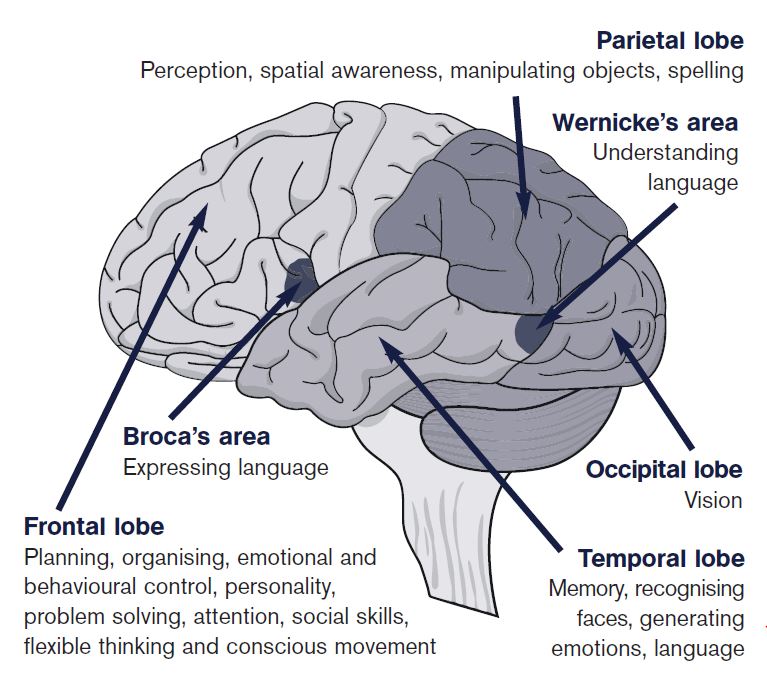
For many people with ADHD, autism or other neurodevelopmental differences, executive function can be inconsistent.
The skills required to manage the task may not yet be reliable.
Executive function includes:
- Inhibitory control: stopping yourself from acting immediately
- Working memory: holding information in mind while using it
- Cognitive flexibility: shifting from one task, rule or idea to another
- Planning: knowing what to do first, next and last
- Task initiation: starting without becoming stuck
- Emotional regulation: managing frustration, excitement or disappointment
- Sustained attention: staying with a task long enough to complete it
In a classroom environment, weak executive function may look like not listening, interrupting, forgetting, rushing, avoiding work, emotional outbursts or unfinished tasks.
In our dojo, we help channel this energy and pattern with the following approaches
- Instead of being told to sit or stand still for long periods, the person is taught to move with purpose helping build the inhibitory control.
- Instead of abstract instructions, they receive physical demonstrations with guided motions from me.
- Instead of being punished for energy, they are taught how to direct energy through padwork, or striking a bag or me!
- Instead of being labelled as disruptive, they are given structure, rhythm, repetition and clear expectations.
- If they need to regulate, they are not punished or shamed but rather given the opportunity to do so.
That is where my way of martial arts can become powerful for someone with neurodiversity.
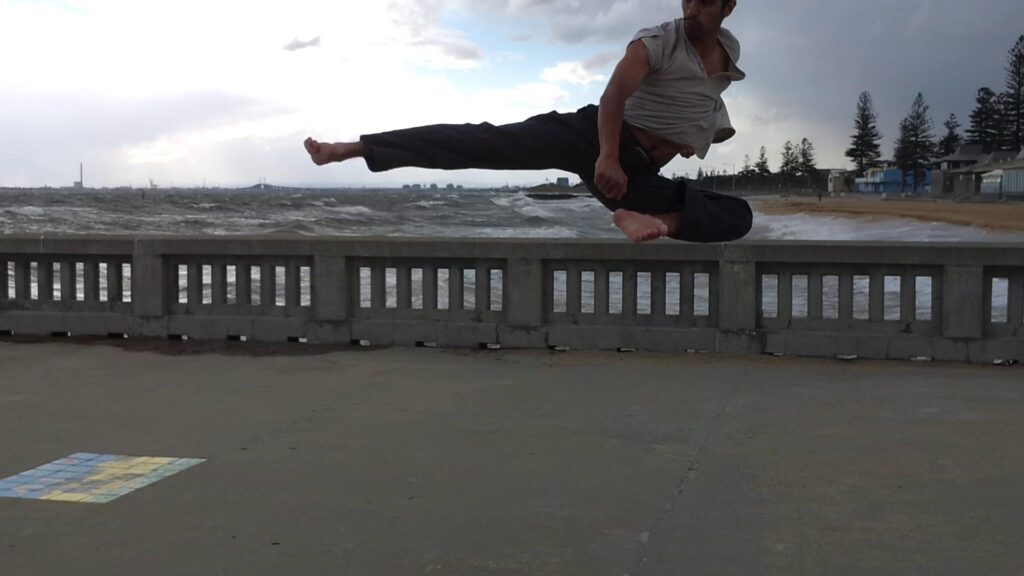
STRESS
MOVEMENT
CONFIDENCE
How its all Linked
Many neurodivergent people struggle not only with attention or behavior, but also with motor skills.
If these movement challenges are not supported, they can carry into adult life and be particularly challenging.
This is relevant for anyone with dyspraxia, developmental coordination difficulties, ADHD and autism.
This can include balance, coordination, posture, body awareness, timing, motor planning and fine motor control.
These issues are often missed because our society focuses only on behaviour or school performance or work productivity in an office.
Movement is not separate from learning.
Movement is part of brain development.
Someone who struggles with movement may also struggle with confidence.
They may avoid sport, avoid playground games, appear clumsy, become frustrated easily or prefer screens because screens do not expose their physical difficulties in front of other children.
Repetitive movement practices help support & build neuroplasticity.
This helps build confidence.
Neuroplasticity refers to the brain and nervous system’s ability to adapt, reorganize and build new connections in response to repeated experience, learning, movement, challenge and feedback.
In martial arts, this is where repeated practice becomes important.
At KJ Martial Arts you do not just learn how to “do a punch” or “do a kick.” You will repeat the movement many times while learning balance, posture, timing, distance, control, awareness and emotional regulation.
This is also where traditional martial arts concepts such as Zanshin and Mushin become useful and become critical in the way I teach.
Zanshin can be understood as relaxed awareness. It is the ability to stay present, aware of the body, aware of the space, and aware of what is happening around you.
Mushin, often translated as “no mind,” does not mean having no thoughts at all. It refers to a state where the mind is not trapped by fear, overthinking, distraction or hesitation. In modern terms, it is close to a trained flow state: calm, present, responsive and not overwhelmed by unnecessary mental noise.
For neurodivergent people, this matters more. Many people with ADHD, autism or dyspraxia can become overloaded by too much instruction, too much noise, too much pressure, or too many thoughts happening at once.
Structured lessons can give the person a physical pathway back into the present moment. The student learns to breathe, reset, move, focus on one action at a time, and respond with control.
The goal is not to force the student to appear “normal.” The goal is to help the person build body awareness, emotional control, confidence and calm readiness.
Stress inoculation – this is controlled repeated exposure to manageable stress situation which trains your nervous system to stay calm and build resilience. We use this regularly to help build resilience and emotional regulation, this is similar to how trauma survivors or people with PTSD are treated.
THE 7 MOTOR SKILLS I TEACH
1. Balance and Postural Control
Balance is the ability to control the body while still or moving. Good balance helps a child stand, kick, jump, land, turn, crawl and change direction safely.
In Karate, stances such as zenkutsu dachi, kokutsu dachi and kiba dachi build balance and postural awareness – Zanshin.
At KJ Arts Centre, we use balance drills such as lunges, knee raises, controlled kicks, stance transitions and moving balance exercises. These help people understand how their body feels, where their weight is, and how to stay stable while moving. This helps build neuroplasticity.
2. Bilateral Coordination
Bilateral coordination is the ability to use both sides of the body together. Crawling, blocking while stepping, punching from stance, and coordinating opposite arm and leg movements all develop this skill.
I often give a drill of combining Front Leg kick (Kizami Geri) and Reverse Hand punch (Gyaku Zuki) or Back Leg Front Kick (Mae Geri) with a combo punch of Front Jab & Reverse Punch (Kizami Zuki Gyaku Zuki combo).
These drills are powerful because they force the brain and body to communicate across both sides.
This requires coordination of legs, arms, posture, eyes, timing and direction.
3. Proprioception and Body Awareness (Zanshin)
Proprioception is the body’s sense of where it is in space.
Some people do not naturally know how hard they are pushing, how close they are standing, or where their limbs are without looking.
My way of doing martial arts helps because movements are repeated with clear positions, targets and feedback from me. My students learn where their feet should be, where their hands should return, how far to step, how close to stand, and how much force to use.
This is not just physical. It also develops awareness.
My students begin to understand their body, their space, their distance and their control.
4. Motor Planning
Motor planning is the ability to work out how to perform a movement.
For some, copying a sequence is difficult. A kata, combination drill or footwork pattern helps them practise planning movement in steps.
For example, the person may need to remember:
step forward, block, punch, turn, reset.
This requires attention, memory, sequencing and body control. Over time, the movement becomes smoother because the brain has practised the pathway many times.
This is where Mushin begins to develop.
At first, the beginner has to think about every detail. Over time, with repetition, the movement becomes more natural.
The person becomes less trapped in overthinking and more able to move with calm focus.
I often find that in neurodivergent people when they unlock “Hyperfocus” in martial arts movements, they tend to be better by 10 fold vs neurotypicals. This can happen in 1 class or 10 years or 20.
Personally martial arts movements help me meditate, relax and focus.
5. Rhythm and Timing
Timing matters in martial arts.
At KJ Martial Arts I teach how to step, when to block, when to strike, when to breathe and when to stop.
I believe that rhythm supports attention because the a person begins to anticipate patterns. For many neurodivergent people, rhythm can be regulating. The repeated pattern of movement, breathing, counting and correction gives the nervous system something predictable to follow.
This is another pathway toward Mushin. The person is not being asked to empty their mind by sitting still. They are learning mental stillness through structured movement.
6. Locomotor Movement
Locomotor skills are movements that move the body from one place to another: running, jumping, hopping, skipping, crawling, lunging, stepping and sliding.
The footwork drills I use develops these through yori ashi, tai sabaki, stance transitions and kumite movement drills.
These movements help the neurodiverse brain learn how to enter, exit, avoid, turn, recover and reposition. This is important not only for karate, but for general physical confidence.
7. Object Control and Targeting
Object control includes tracking, striking, catching, kicking and aiming.
In my Karate classes, this may involve pad work, target work, controlled kicking drills and accuracy-based striking. The person learns not just to move, but to control force, distance and direction.
These skills are not just “fitness.”
They are foundations for confidence, learning, body control, self-regulation, Zanshin and Mushin.
Through my classes you learn to become more aware, more stable, more coordinated, more focused and more capable.
The body becomes the doorway into the mind.
What makes my method different from other sports?
I believe the right kind of movement can help develop attention, emotional regulation and executive function rather than just physical fitness.
This is especially true when the activity is structured, progressive and mentally engaging. Running in circles may burn energy, but it does not automatically build self-control.
A chaotic sport may help fitness and coordination, but it may overwhelm a person with sensory or executive-function difficulties. What makes structured martial arts different is that the body and brain must work together.
In my classes students are required to
- listen to instructions
- watch demonstrations
- copy movement
- remember sequences
- inhibit impulsive reactions
- wait for a command
- control speed and power
- coordinate both sides of the body
- manage frustration
- practise repetition
- accept correction
- transition between stillness and action
This is executive function in physical form. This is truly where my classes work for people with neurodiversity.
I am not asking people to “focus.” They are learning focus through movement.
I won’t lecture about self-control. They are practising self-control every time they hold a stance, wait for a command, stop a technique before contact, bow before training, reset after a mistake or try again after frustration.
This is why martial arts can be so useful for people who struggle with ASD, ADHD and other labels of neurodiversity!
For example – ADHD is not simply a lack of attention. Often it is difficulty regulating attention. A person may not focus well on a worksheet, but may focus intensely when the activity is meaningful, physical, challenging and structured. Karate can turn attention into action.
How my classes help with ADHD especially for children
I am often told that children with ADHD often struggle with inattention, hyperactivity, impulsivity and emotional regulation.
To me, these are not character flaws. They are connected to differences in self-regulation and executive function as explained above.
My class is structured to help support a child with ADHD by doing the following
1. Predictable Structure
Children with ADHD often do better when expectations are clear. My class has routine: bow in, warm up, basics, drills, kata or kumite, partner work, cooldown, bow out.
This predictability reduces anxiety and helps the child know what comes next.
At the KJ Arts Centre, we also add calisthenics & plyometrics into our classes which help provide an extra level of stimulation.
2. Short Instruction, Immediate Action
Long verbal explanations can overload attention.
I have found that when instruction is short and physical: “Watch me. Step. Block. Punch. Reset.” a child will learn by doing, feeling and reacting.
3. Movement With Purpose
Many children with ADHD need movement to stim. In my class we do not shame movement, we just refine it. Energy becomes stance, punch, kick, block, footwork, reaction and control. If a child likes to flap their hands, I encourage doing star jumps! or some cool spinning moves.
4. Impulse Control as part of partner training
Everyone must learn not to hit whenever they feel like it or when they get angry. They must wait for the command, control distance, stop when told, and respect their partner. I do multiple partner drills to encourage this control. This turns impulse control into a physical skill.
Our 4th dojo principle is “Respect Others”.
5. Working Memory
Combinations, kata and drills require the child to hold a sequence in mind. Step forward, block, punch, turn, reset. Over time, this strengthens the ability to remember and execute multi-step instructions.
6. Emotional Regulation
Martial arts training includes lots of challenges. A child will make mistakes. They will lose balance. They will forget a sequence. They will feel frustrated.
In a good dojo, the child learns that mistakes are part of training. They breathe, reset and try again.
In my dojo, I encourage them to train harder. Our third dojo principle is “put maximum effort”.
7. Confidence Through Mastery
Many neurodivergent children spend the day being corrected for what they cannot do in school or at home or outside.
My classes give them a visible pathway of progress. They can see improvement in their stance, punch, focus, strength, balance and confidence.
That matters. It really drives their self confidence and spirit.
Martial Arts Is Not a Cure, But It Can Be a Powerful Support Tool
I often find people talking about Cures or Fixes.
It is important to be honest. We do not cure ADHD Autism or any Neurodiversity. Neurodivergent people do not need to be “fixed”!
They need support on many things attention, coordination, working memory, impulse control, confidence, emotional regulation and social participation.
The quality of instruction matters. A poor martial arts class can make things worse.
If the environment is too loud, too chaotic, too shame-based, too aggressive or too focused on punishment, a neurodivergent child may become overwhelmed.
But a structured, respectful, small-group class can be very different.
The best environment is:
- predictable
- calm but active
- structured but flexible
- firm but not humiliating
- physically challenging but safe
- repetitive but not boring
- respectful of sensory needs
- focused on progress, not comparison
This is why class size matters. A child with support needs may not thrive in a class of 30 children where the instructor cannot see what is happening.
Smaller groups allow the instructor to notice body language, frustration, fatigue, overload and confidence levels.
I cap all my classes to ensure that we put neurodivergent people first.
A good dojo does not need every child to be identical. In traditional martial arts, progress is individual. Every student has a starting point. Every student works on their own body, mind and spirit.
Build Capacity, Not Shame
Neurodiversity is not a problem to erase. It is a reality to understand.
People do not all learn the same way. They do not all move the same way. They do not all regulate emotion, attention and sensory input the same way.
When adults misunderstand this, children are often punished for nervous-system differences they did not choose.
My training combines movement, discipline, repetition, rhythm, balance, coordination, focus, emotional regulation and confidence. It gives children a way to practise executive function through the body.
This will not replace medical, psychological, occupational therapy or educational support where those are needed. But it can sit alongside them as a powerful developmental practice.
The goal is not to make neurodivergent person appear normal.
The goal is to help them become strong, capable, confident and understood.
Different does not mean broken. With the right environment, different can become powerful.
Leave a Reply
You must be logged in to post a comment.